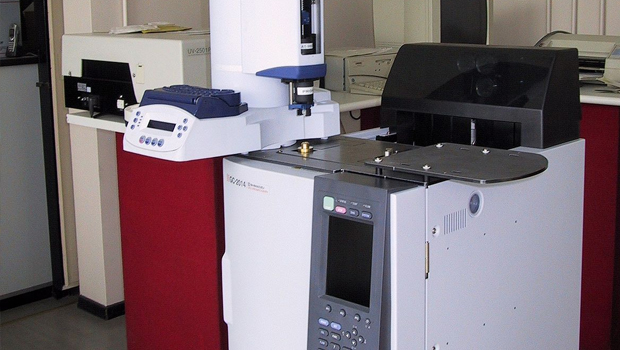
Gas chromatography's goal is to identify, separate and measure each chemical component within essential oil samples. The machine that performs this test (gas chromatograph) heats the oil, then pushes it through a column in a passive gas like helium, hydrogen or nitrogen. Because of their molecular weights and sizes, the individual oil compounds move through the column at different speeds. The column's end has a detector that measures the time each component passes through. The chromatogram is a report that shows a graph showing the separation of the detector response (on y-axis), and the retention time (on x-axis). Scientists compare the chromatogram's peaks with established standards to confirm that the right chemical constituents are present in the correct amounts.